
Newark’s pothole problem: why the cold snap made it worse and why reporting them matters
If it feels as though Newark’s roads have deteriorated almost overnight, there is a reason for it. Potholes rarely appear suddenly, but prolonged cold weather can turn minor surface damage into serious road defects in a matter of weeks. Over the past month, Nottinghamshire has experienced a sustained cold spell, with temperatures repeatedly dropping below freezing overnight before thawing again during the day. That repeated freeze–thaw cycle is one of the main causes of potholes.
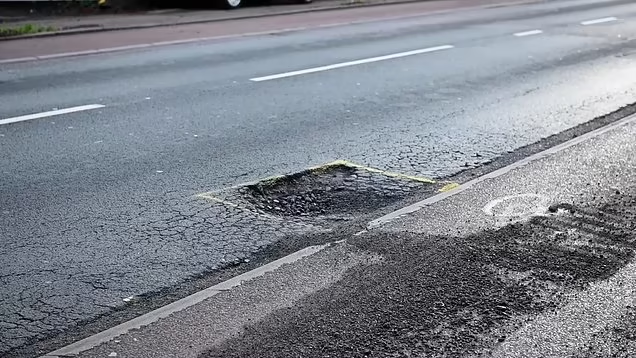
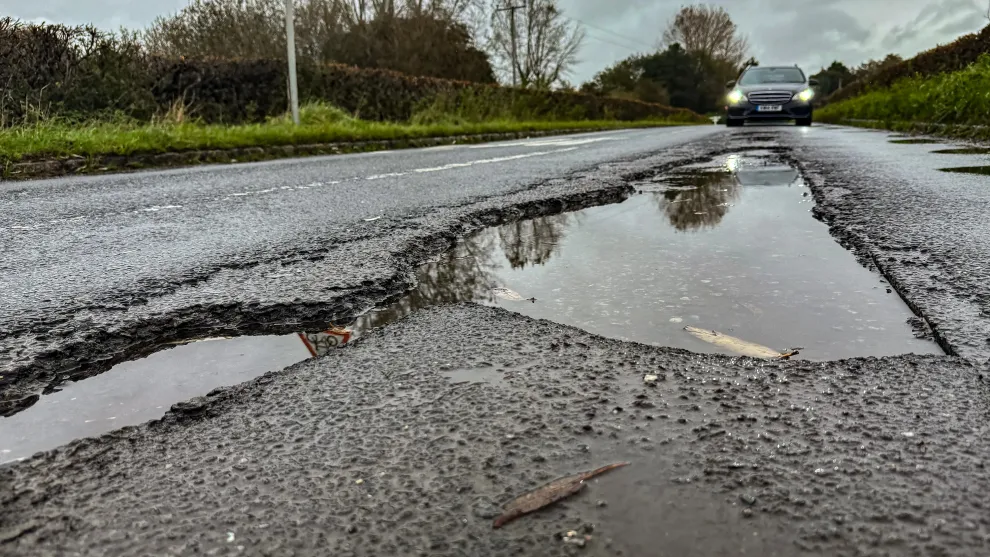
The process begins below the surface. Water seeps into small cracks in the road. When temperatures fall, that water freezes and expands, forcing the cracks wider. When it thaws, the surface relaxes slightly, but the damage remains. As this cycle repeats, the layers of the road structure begin to loosen. Traffic passing over the weakened area, particularly heavier vehicles, accelerates the breakdown until sections of tarmac fail and a pothole forms.
This is why gritting, while essential for road safety, does not prevent potholes. Grit reduces ice on the surface, but it does nothing to stop water penetrating the road or freezing beneath it during long cold periods. Report a pothole here.
Who fixes potholes in and around Newark?
For most roads and pavements across Newark and the surrounding area, responsibility lies with Nottinghamshire County Council, which acts as the local highway authority. This includes residential streets, rural roads and the majority of A-roads. However, major trunk roads are managed separately. Roads such as the A1, along with motorways and certain strategic routes, fall under the responsibility of National Highways. This distinction is important, because potholes must be reported to the correct authority in order to be assessed and repaired. On high speed roads like the A1, defects that present an immediate risk are typically prioritised more quickly due to the safety implications. Report a pothole here.
When will a pothole be repaired?
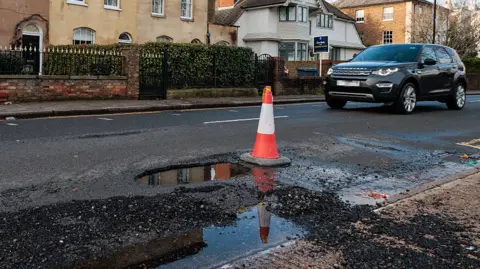
Not every defect is repaired immediately. Like all councils, Nottinghamshire works to defined safety thresholds to decide which potholes require urgent attention. In general terms, a pothole on the road surface must reach a certain depth before it is classed as a safety defect (currently 40mm). Once it meets that standard, it is inspected and prioritised based on its size, depth and location. The most serious defects, those posing an immediate danger, can be dealt with within hours, while others may be scheduled for repair over the following days or weeks. Residents sometimes notice potholes marked with paint but not filled straight away. In most cases, this indicates the defect has been logged and assessed, with repairs planned when appropriate equipment or materials are available. Report a pothole here.
Why reporting potholes still matters
Although roads are inspected, councils rely heavily on reports from the public to identify problems quickly — particularly during winter, when deterioration can happen fast. Nottinghamshire receives many thousands of pothole reports each year, but those figures represent reports rather than individual defects. A single report may include several potholes, and many defects go unreported altogether. If a pothole is not reported, it may not be assessed, and it may not be repaired. Nationally, millions of potholes are filled every year, yet the backlog remains significant. Limited budgets, poor weather and the sheer scale of the network all play a part. Report a pothole here.
How to report a pothole properly
The simplest way to report a pothole is through the official GOV.UK reporting service, which uses a postcode to direct your report to the correct authority. Trunk road issues, such as those on the A1, are passed to National Highways. Reports are most effective when they include a clear location, a brief description of where the pothole sits on the road, and good photographs. A close-up image helps show the size and depth of the defect, while a wider photo helps inspection teams locate it quickly. Where it is safe to do so, including a tape measure or ruler in a photo can also assist with assessment. Safety should always come first. If a pothole is on a fast or busy road, it is better to provide a clear description and approximate location than to risk injury for a photograph. Report a pothole here.
A small action that makes a real difference
Potholes damage vehicles, pose risks to cyclists and pedestrians, and frustrate drivers daily. They also cannot be repaired unless they are identified. After weeks of freezing weather, road damage across Newark has become more visible. Reporting potholes may seem like a small act, but it remains one of the most effective ways residents can help prioritise repairs and improve local roads.
Report a pothole here.


I just couldn’t depart your website before
suggesting that I extremely enjoyed the standard info an individual supply to your guests?
Is going to be back often in order to check out
new posts