Everyone’s talking about carbon footprints, renewable energy, net zero and sustainable growth, but there’s one subject that almost nobody dares to mention — the fact that the world simply cannot support eight billion people. We can’t keep pretending that the planet can sustain unlimited growth forever, but it can’t.
Every extra person means more demand for food, water, energy, housing, and land. More production, more transport, more waste. Even if each of us somehow cut our personal emissions in half overnight, global totals would still rise simply because there are more of us each day. The maths is brutally simple: infinite growth on a finite planet doesn’t work. According to the United Nations, the global population is expected to reach nearly 10 billion by 2050 — that’s the equivalent of adding another China and another India in just a few decades.
If it’s such a problem, then why don’t world leaders and climatologists mention it? Because population has become a taboo topic — politically radioactive. No government wants to touch it, because to even hint that there might be too many people risks accusations of discrimination, elitism, or worse. It’s much easier to tell the public to buy electric cars, sort their recycling, and eat less meat than it is to tell them they can’t have children. Meanwhile, thousands more consumers join the global marketplace every day. The maths might not add up, but from a government’s point of view, it keeps the political narrative tidy.
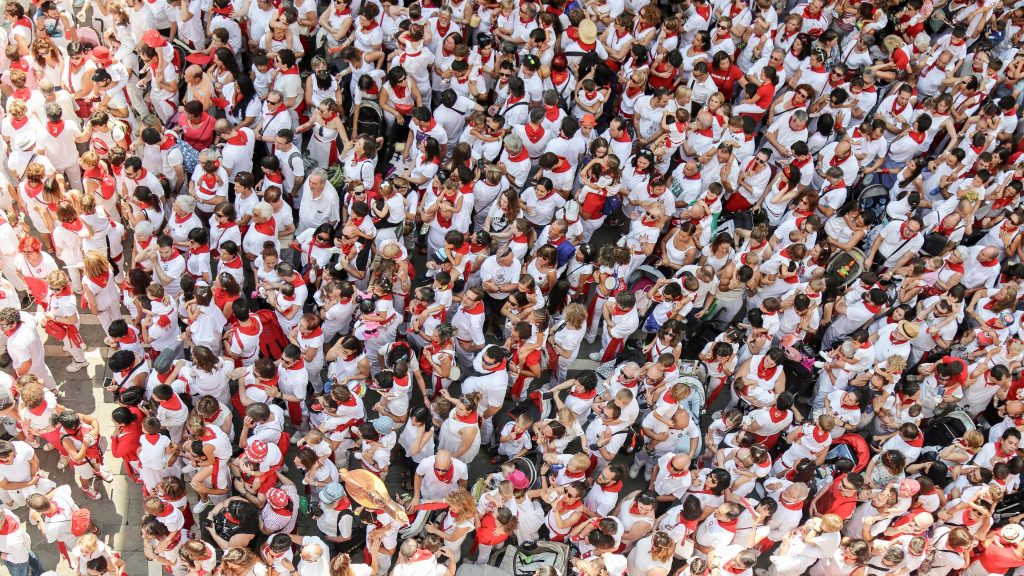
It’s not only governments that shy away from the big decisions. Religion also has a large part to play. Many faiths still encourage large families, seeing them as a blessing or even a moral duty. In many parts of the world, having many children is viewed as a sign of strength, tradition, or divine favour. Having large families is rooted in religious values and cultural expectations around family size remain strong, and politicians rarely challenge those norms for fear of backlash. Growth — both economic and demographic — has become sacred.
When governments have tried to tackle population growth directly, it’s rarely gone smoothly. Take China’s one-child policy, introduced in 1980 to curb overpopulation. It did slow growth, but at a high human cost. Children grew up without siblings, social pressure created a gender imbalance, and darker consequences emerged — including baby smuggling and illegal adoptions. The policy was quietly abandoned decades later, but the after-effects still echo today: an ageing population, shrinking workforce, and millions of men without partners. It’s a stark warning that population control, when imposed from above, can create problems as severe — if not worse — than the ones it tries to solve.
Faced with insurmountable challenges, most governments pretend that technology will fix everything. We’ll invent cleaner energy, more efficient farming, greener transport, and somehow make room for everyone. But every new innovation brings new demands. Cheaper flights mean more travel. More efficient farming means more mouths to feed. It’s a feedback loop that no amount of carbon offsetting or green tech can truly balance. The uncomfortable truth is that the planet doesn’t care about good intentions — only about numbers.
We have to face the fact that talking about population isn’t about blaming anyone. It’s about being honest. Every country, culture, and faith must face the same reality: there are limits. The Earth can provide only so much fresh water, fertile soil, and breathable air. We can’t keep adding billions of people and expect a handful of solar panels and electric cars to save us.
The truth is simple, even if it’s uncomfortable: the planet cannot support eight billion people living modern, high-consumption lifestyles — and it certainly can’t handle ten. Real sustainability isn’t about hashtags or government pledges. It’s about recognising that our species, for all its brilliance, isn’t exempt from the laws of nature. Populations of any species that grow beyond their environment’s limits eventually hit a wall. Ours will too — unless we choose to slow down before nature does it for us.